LOUDR
adjective
strong or emphatic in expression
producing or capable of producing much noise
About LOUDR
Curating public conversations through art, culture and participation.
LOUDR is an independent curatorial initiative. It builds long-term cultural projects - public programmes, participatory experiences, research, around a conviction that the exhibition is a starting point, not a container.
Work continues after the opening. It moves into workshops, classrooms, publications, neighbourhoods, the ordinary rooms where people actually process their lives. LOUDR is built for that afterlife.
Each project starts with a question we can't yet answer. We work with artists, educators, researchers, mental health practitioners and communities who are willing to sit inside that uncertainty with us. What comes out depends on the question: sometimes an exhibition, sometimes a workshop series, sometimes a public intervention, sometimes just a room where a difficult conversation becomes possible.
The through-line isn't a discipline or a medium. It's a commitment to public thinking... building spaces where people question together, instead of receiving conclusions. LOUDR moves between contemporary art, education, mental wellbeing, sustainability, identity and community life because the questions worth asking don't respect those boundaries either.
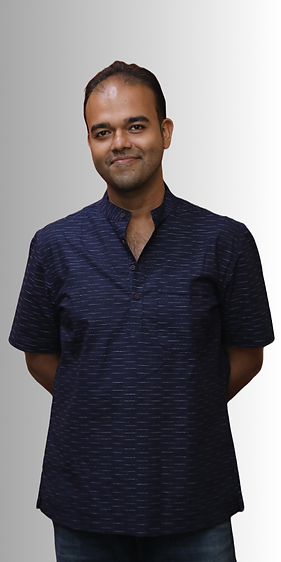
Nilanjan Chakravarty
Founder + Lead Curator
Nilanjan Chakravarty is a curator, cultural practitioner and educator based in Delhi.
Over the past decade, his work has moved between exhibitions, public programmes and community engagement, exploring how curatorial practice can extend beyond galleries into everyday life.
His projects often begin with a question rather than a theme. They bring together artists, institutions, researchers and communities to collectively investigate subjects such as identity, masculinity, environmental sustainability, memory and mental wellbeing.
In 2025, he founded LOUDR as a platform for developing participatory cultural projects that combine artistic inquiry with public engagement. Recent initiatives include The Life Manual Project, a growing archive of lived experience developed in collaboration with Amaha, and Practice to Project, a learning programme that helps artists transform their practices into sustainable public initiatives.
His work is informed by a simple conviction: the role of a curator is not only to present culture, but also to create the conditions in which meaningful conversations can happen.